Notebookcheck Logo

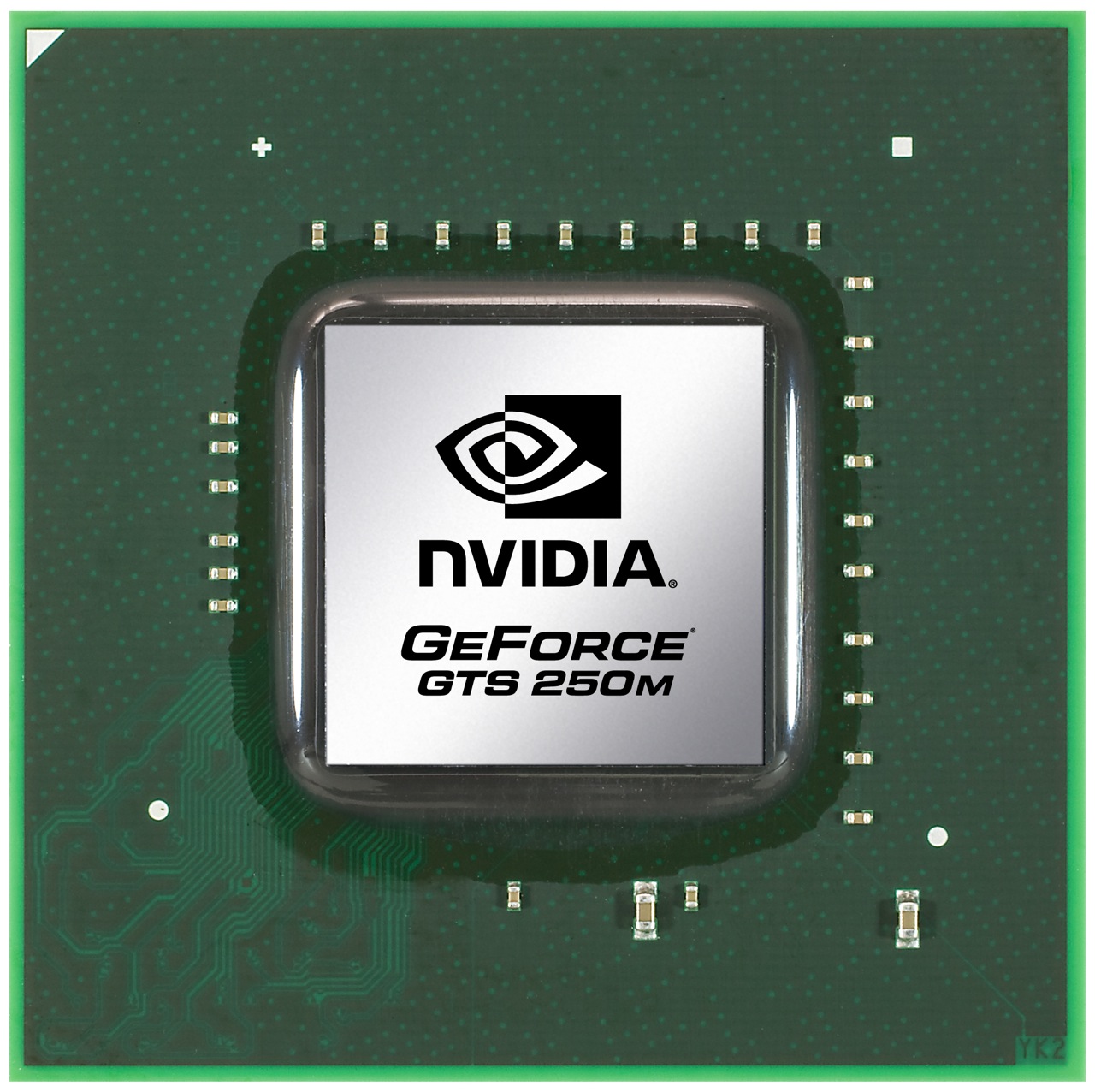
NVIDIA GeForce GTS 250M

NVIDIA GeForce GTS 250M

La Nividia GeForce GTS 250M è un adattatore grafico DirectX 10.1 per portatili che si basano su un core GT215 da 40nm. Sfrutta 96 shader cores come la 9800M GT, ma il bus di memoria è da appena 128 bit. In compenso, la GTS 250M supporta la GDDR5.
Il core della GTS250M è chiamato GT215 e secondo Nvidia si basa sull'attuale architettura desktop di fascia alta (serie GTX 200). Inoltre, Nvidia ha implementato una micro-architettura per un ulteriore risparmio energetico ed incremento prestazionale. Pertanto, le prestazioni per unità shader della scheda GeForce dovrebbero essere leggermente superiori rispetto alla generazione precedente.
Come la GeForce 9800M GT, la GTS 250M sfrutta 96 processori stream che fanno il lavoro al posto degli shaders pixel- e vertex dedicati. Gli unified shaders della Nvidia sono 1-dimensional (AMD ha shaders 5-dimensional).
La GeForce GTS250M supporta anche CUDA, DirectX Compute, OpenCL, e PhysiX usa gli shaders per altre applicazioni rispetto al rendering di immagini (come codifica videos, calcolo fisico di un gioco o applicazioni matematiche). Per queste applicazioni particolari, la GPU riesce ad essere notevolmente superiore rispetto alle attuali CPUs.
Congiuntamente ai chipset della Nvidia con grafica integrata (i.e. 9400M), la GTS 250M supporta la Hybrid-SLI (HybridPower e GeForceBoost). La HybridPower è una tecnica che consente di scegliere tra i core grafici integrati e dedicati, in base alle esigenze di prestazioni o di risparmio della batteria. Questo funziona solo sotto Windows Vista (e probabilmente con Windows 7). Sino ad ora gli utenti hanno dovuto utilizzare un tool per fare lo switch tra GPUs. In seguito Nvidia interverrà per inserire automaticamente lo switch nei drivers. La GeForceBoost non è supportata dalla GTS 250M in quanto la modalità SLI non sarebbe in grado di fornire prestazioni migliori.
Le prestazioni della GPU GeForce GTS 250M di fascia medio-alta dovrebbero essere nettamente superiori alla GT 240M in quanto sfrutta il doppio di shader cores. I giochi DirectX 10 pesanti come  Crysis dovrebbero essere fluidi con dettagli medio-alti. I giochi più datati o meno pesanti dovrebbero essere fluidi con settaggio elevato e risoluzione alta.
In base al tipo di memoria grafica utilizzata (GDDR5, GDDR3) le prestazioni possono differire.
Il consumo di energia della scheda grafica mobile è con i suoi 27 Watt TDP relativamente basso (in particolare se si considera che la GTS 260M che ha un clock superiore richiede 10 Watt in più). Inoltre, Nvidia dichiara che il nuovo core implementato richiede metà energia in modalità di riposo (rispetto alla generazione precedente).

GeForce GTS 200M Serie

GeForce GTS 260M 96 @ 0.55 GHz128 Bit @ 1800 MHz
GeForce GTS 250M 96 @ 0.5 GHz128 Bit @ 1600 MHz
Nome in codiceN10E-GE
ArchitetturaGT2xx
Pipelines96 - unified
Velocità del core500 MHz
Velocità de Shader1250 MHz
Velocità della memoria1600 MHz
Larghezza del bus di memoria128 Bit
Tipo di memoriaDDR3, GDDR3, GDDR5
Max. quantità di memoria1024 MB
Memoria condivisano
APIDirectX 10.1, Shader 4.1
Consumo di corrente28 Watt
Transistor Count727 Milioni
tecnologia40 nm
CaratteristicheDirectX Compute Support (Windows 7), CUDA, OpenCL, HybridPower, PhysX, SLI, Powermizer 8.0, MXM 3.0 Type-B
Dimensione del portatilegrande
Data dell'annuncio15.06.2009
Informazioni360 Gigaflops
Link alla pagina del produttorewww.nvidia.de

Benchmark

3DMark Vantage
3DM Vant. Perf. total +
3DMark Vantage - 3DM Vant. Perf. total
min: 3442     media: 3848     media: 3659 (1%)     massimo: 4371 Points
3DM Vant. Perf. GPU no PhysX +
3DMark Vantage - 3DM Vant. Perf. GPU no PhysX
min: 2944     media: 3128     media: 3014 (2%)     massimo: 3653 Points
Restrict / Search: Model: Max. age: years
3DMark 2001SE - 3DMark 2001 - Standard
32373 Points (34%)
3DMark 03 - 3DMark 03 - Standard
20231 Points (11%)
3DMark 05 - 3DMark 05 - Standard
min: 14388     media: 14733     media: 14463 (16%)     massimo: 15607 Points
Intel Graphics Media Accelerator (GMA) 500
133.4 -99%
...
14111 -4%
14205 -4%
14211 -4%
14224 -3%
14352 -3%
14377 -2%
14502 -2%
14510 -2%
14564 -1%
NVIDIA GeForce GTS 250M
14733
14773 0%
14777 0%
14855 1%
14869 1%
AMD Radeon R7 M260
14924 1%
14938 1%
14952 1%
AMD Radeon HD 6750M
15011 2%
15058 2%
...
68868 367%
max:
87172 492%
0%
100%
Restrict / Search: Model: Max. age: years
3DMark 06 3DMark 06 - Score Unknown Settings +
3DMark 06
8310 punti (11%)
3DMark 06 - Standard 1280x1024 +
3DMark 06
min: 7433     media: 7625     media: 7484 (10%)     massimo: 8283 Points
3DMark 06 - Standard 1280x800 +
3DMark 06
9020 Points (12%)
3DMark 06 - Standard 1280x720 +
3DMark 06
8401 Points (11%)
Windows 7 Experience Index - Win7 Gaming graphics
min: 6.5     media: 6.6     media: 6.6 (83%)     massimo: 6.7 Points
Windows 7 Experience Index - Win7 Graphics
min: 6.5     media: 6.6     media: 6.6 (83%)     massimo: 6.7 Points
Cinebench R10 Cinebench R10 Shading (32bit) +
Cinebench R10 - Cinebench R10 Shading (32bit)
min: 4310     media: 4489     media: 4451 (3%)     massimo: 4753 punti
- Valori di benchmark per questa scheda grafica
red legend - Valori medi di benchmark per questa scheda grafica
* Numeri più piccoli rappresentano prestazioni supeiori

Benchmarks per i giochi

I seguenti benchmarks deirivano dai benchmarks dei portatili recensiti. Le prestazioni dipendono dalla scheda grafica utilizzata, dal clock rate, dal processore, dai settaggi di sistema, dai drivers, e dai sistemi operativi. Quindi i risultati non sono rappresentativi per i portatili con questa GPU. Per informazioni dettagliate sui risultati del benchmark, cliccate sul numero di fps.

basso 800x600
139.6  fps    + Confronta
medio 1024x768
47.5 48.5 52 ~ 49 fps    + Confronta
alto 1366x768
42.2 48.7 ~ 45 fps    + Confronta
ultra 1920x1080
25.4 30.2 ~ 28 fps    + Confronta
» Giocabile con tutti i portatili testati con dettagli alto.
Risen

Risen

2009
medio 1024x768
31.4 35.5 36.7 ~ 35 fps    + Confronta
alto 1366x768
27.3 29 ~ 28 fps    + Confronta
» Il Benchmark indica che il gioco non è utilizzabile con i settaggi testati.
Need for Speed Shift

Need for Speed Shift

2009
medio 1024x768
38.8 42 42.1 ~ 41 fps    + Confronta
alto 1366x768
31.8 39.2 ~ 36 fps    + Confronta
» Giocabile con la maggior parte dei portatili testati con dettagli alto.
Anno 1404

Anno 1404

2009
basso 1024x768
120.6  fps    + Confronta
ultra 1280x1024
24.2 26.2 26.5 29.8 ~ 27 fps    + Confronta
» Giocabile con tutti i portatili testati con dettagli basso.
F.E.A.R. 2

F.E.A.R. 2

2009
medio 1024x768
69.4  fps    + Confronta
alto 1280x1024
41.2 44.2 45.5 50.8 ~ 45 fps    + Confronta
» Giocabile con tutti i portatili testati con dettagli alto.
Left 4 Dead

Left 4 Dead

2008
basso 640x480
152.3  fps    + Confronta
alto 1024x768
66.5 99.1 100.2 ~ 89 fps    + Confronta
» Giocabile con tutti i portatili testati con dettagli alto.
Crysis - GPU Benchmark

Crysis - GPU Benchmark

2007
basso 1024x768
88.4  fps    + Confronta
medio 1024x768
48 51.8 ~ 50 fps    + Confronta
alto 1024x768
24.6 26.7 28.1 31.4 ~ 28 fps    + Confronta
» Giocabile con tutti i portatili testati con dettagli medio.
Crysis - CPU Benchmark

Crysis - CPU Benchmark

2007
basso 1024x768
95.2  fps    + Confronta
medio 1024x768
45.2 49.3 ~ 47 fps    + Confronta
alto 1024x768
21.9 23.8 25.1 28.3 ~ 25 fps    + Confronta
» Giocabile con tutti i portatili testati con dettagli medio.
Call of Juarez Benchmark

Call of Juarez Benchmark

2006
alto 1024x768
11.9 19.5 ~ 16 fps    + Confronta
» Il Benchmark indica che il gioco non è utilizzabile con i settaggi testati.
bassomedioaltoultraQHD4K
CoD Modern Warfare 2139.6494528
Risen3528
Need for Speed Shift4136
Anno 1404120.627
F.E.A.R. 269.445
Left 4 Dead152.389
Crysis - GPU Benchmark88.45028
Crysis - CPU Benchmark95.24725
Call of Juarez Benchmark16
bassomedioaltoultraQHD4K
< 30 fps
< 60 fps
< 120 fps
≥ 120 fps


2
3

5
1
4
3
1
2


Per conoscere altri giochi che potrebbero essere utilizzabili e per una lista completa di tutti i giochi e delle schede grafiche visitate la nostra Gaming List

Amazon Logo
  • $759.00
    HP Victus 15.6" Full HD 144Hz Gaming Laptop, Intel Core i5-12450H, NVIDIA GeForce RTX 3050,16GB RAM, 512GB PCIe SSD, Wi-Fi 6, Backlit Keyboard,Windows 11 Pro, Performance Blue
  • $929.00
    HP Victus 15.6" Gaming Laptop PC, NVIDIA GeForce RTX 3050 Ti, AMD Ryzen 7 5800H, Refined 1080p IPS Display, Compact Design, All-in-One Keyboard with Enlarged Touchpad, HD Webcam (15-fb0028nr, 2022)
  • $196.88
    ASUS Dual NVIDIA GeForce RTX 3050 6GB GDDR6 OC Edition Gaming Graphics Card - PCIe 4.0, HDMI 2.1, DisplayPort 1.4a, 2-Slot Design, Axial-tech Fan Design, Steel Bracket, 3 Year Warranty
  • $849.99
    HP Victus 15 Gaming Laptop, NVIDIA GeForce RTX 3050 Ti, 12th Gen Intel Core i7, 8 GB RAM, 512 GB SSD, Full HD IPS Display, Windows 11 Home, Backlit Keyboard, Enhanced Thermals (15-fa0020nr, 2022)
  • $2,239.00
    ASUS ROG Strix G16 16" 240Hz Gaming Laptop Intel-i9-14900HX(24 cores), NVIDIA GeForce RTX 4060, 32GB DDR5 RAM, 1TB SSD, Wi-Fi 6, Backlit Keyboard, Windows 11 Pro & Microsoft Office Lifetime License

v1.35
log 18. 09:51:54

#0 ran 0s before starting gpusingle class +0s ... 0s

#1 no ids found in url (should be separated by "_") +0s ... 0s

#2 not redirecting to Ajax server +0s ... 0s

#3 did not recreate cache, as it is less than 5 days old! Created at Tue, 16 Jun 2026 19:30:27 +0200 +0.005s ... 0.005s

#4 no comparison url found in template nbc.compare_page_1 needed +0.013s ... 0.019s

#5 composed specs +0s ... 0.019s

#6 did output specs +0s ... 0.019s

#7 start showIntegratedCPUs +0s ... 0.019s

#8 getting avg benchmarks for device 1297 +0.024s ... 0.043s

#9 got single benchmarks 1297 +0.022s ... 0.064s

#10 got avg benchmarks for devices +0s ... 0.064s

#11 min, max, avg, median took s +0.6s ... 0.665s

#12 before gaming benchmark output +0s ... 0.665s

#13 Got 48 rows for game benchmarks. +0.003s ... 0.668s

#14 composed SQL query for gamebenchmarks +0s ... 0.668s

#15 got data and put it in $dataArray +0.004s ... 0.672s

#16 benchmarks composed for output. +0.089s ... 0.76s

#17 no comparison url found in template nbc.compare_page_1 needed +0.522s ... 1.282s

#18 return log +0s ... 1.282s

Recensioni Notebook con NVIDIA GeForce GTS 250M la scheda grafica


Recensione portatile gaming MSI GT640

Nuovi orizzonti. MSI porta una ventata di cambiamento con il suo 15.4 pollici GT640 e con il Core i7 Intel, una GeForce GTS 250M Nvidia nel settore gaming. Vedremo nella nostra recensione se i componenti sono in grado di tenere testa ai precursori, come il GX623, il GT628 o il GT725, in termini di prestazioni.
Intel Core i7-720QM, NVIDIA GeForce GTS 250M, 15.4", 2.7 kg
 

Recensione del notebook Acer Aspire 8940G

Trattamento All-Inclusive? Acer si rivolge a due gruppi di utenti contemporaneamente con l'Aspire 8940G. Da un lato ai cinefili, col suo lettore BluRay ed il grande schermo FullHD da 18,4 pollici. Dall'altro i patiti del gioco, che dovrebbero trovare soddisfazione nella componentistica efficiente in cui spiccano un Intel Core i7-720QM e la nuova GeForce GTS 250M di Nvidia. Leggete la nostra prova dettagliata per vedere se Acer è riuscita in questa difficile prova o se ha fatto il passo più lungo della gamba.
Intel Core i7-720QM, NVIDIA GeForce GTS 250M, 18.4", 4.2 kg

MSI GT740-i7247W7P: Intel Core i7-720QM, 17.00", 2.8 kg
  Recensioni esterne » MSI GT740-i7247W7P

Toshiba Qosmio X500-10W: Intel Core i7-720QM, 18.40", 1.7 kg
  Recensioni esterne » Toshiba Qosmio X500-10W

MSI GT740-021UK: Intel Core i7-720QM, 17.00", 3.2 kg
  Recensioni esterne » MSI GT740-021UK

Toshiba Qosmio X500-111: Intel Core i7-620M, 18.40", 4.6 kg
  Recensioni esterne » Toshiba Qosmio X500-111

MSI GT640-030UK: Intel Core i7-720QM, 15.40", 2.7 kg
  Recensioni esterne » MSI GT640-030UK

Toshiba Qosmio X500-110: Intel Core i7-720QM, 18.40", 4.5 kg
  Recensioni esterne » Toshiba Qosmio X500-110

Toshiba Qosmio X500-10T: Intel Core i7-720QM, 18.40", 4 kg
  Recensioni esterne » Toshiba Qosmio X500-10T

Toshiba Qosmio X500-10V: Intel Core i7-720QM, 18.40", 4.8 kg
  Recensioni esterne » Toshiba Qosmio X500-10V

MSI GT740: Intel Core i7-820QM, 17.00", 3.2 kg
  Recensioni esterne » MSI GT740

Acer Aspire 8940-6865: Intel Core i7-720QM, 18.40", 4.2 kg
  Recensioni esterne » Acer Aspire 8940-6865

MSI GT640: Intel Core i7-720QM, 15.40", 2.7 kg
  Recensioni esterne » MSI GT640

MSI GT640-i7247W7P: Intel Core i7-720QM, 15.40", 2.8 kg
  Recensioni esterne » MSI GT640-i7247W7P

Acer Aspire 8940G-724G64Bn: Intel Core i7-720QM, 18.40", 4.6 kg
  Recensioni esterne » Acer Aspire 8940G-724G64Bn

Acer Aspire 8940G-724G50Bn: Intel Core i7-720QM, 18.40", 4.2 kg
  Recensioni esterne » Acer Aspire 8940G-724G50Bn

Toshiba Qosmio X505: Intel Core i7-820QM, 18.40", 5 kg
  Recensioni esterne » Toshiba Qosmio X505

Google LogoAdd as a preferred source on Google
Mail Logo

Classe 1

Classe 2

GeForce RTX 2080 Super Mobile
RTX PRO 2000 Blackwell Generation Laptop
M5 Max 32-Core GPU *
M1 Max 32-Core GPU *
M1 Max 24-Core GPU *
GeForce RTX 2070 Super Mobile
Radeon 8050S
Radeon RX 5700M *
M1 Pro 16-Core GPU *
Radeon PRO W6600M *
GeForce RTX 2070 Super Max-Q
RTX PRO 1000 Blackwell Generation Laptop *
M1 Pro 14-Core GPU *
Radeon 8040S *
Pro A60M *

Classe 3

GeForce RTX 3050 4GB Laptop GPU
Pro A30M
Radeon Pro 5300M
Radeon RX 5300M
GeForce GTX 1050 Ti Mobile
GeForce GTX 1050 Ti Max-Q
Radeon 680M
Arc 130T
GeForce GTX 1050 Max-Q
Radeon 660M
Radeon Pro 560X
Radeon Pro 560
Quadro P620
Radeon RX 550X (Laptop)
Radeon Pro 555X
Radeon Pro 555
Graphics 3-Core iGPU (Arrow Lake) *
Graphics 2-Core iGPU (Arrow Lake) *
Radeon 630
Quadro P520
Radeon 540X *
Vega 10
Vega 9
UHD Graphics 32EUs
UHD Graphics 750
Vega 7
UHD Graphics Xe 32EUs (Tiger Lake-H)
UHD Graphics Xe G4 48EUs
Vega 8
UHD Graphics 730
UHD Graphics 24EUs (Alder Lake-N) *
Radeon 610M *
UHD Graphics Xe 16EUs *
Adreno 690 *
Adreno 685 *
Adreno 680 *

Classe 4

Posizione approssimativa dell'adattatore grafico

Klaus Hinum, 2009-09-22 (Update: 2014-09-19)