




Lenovo Yoga 7a 2-in-1 14AGP11
Pro
Contro
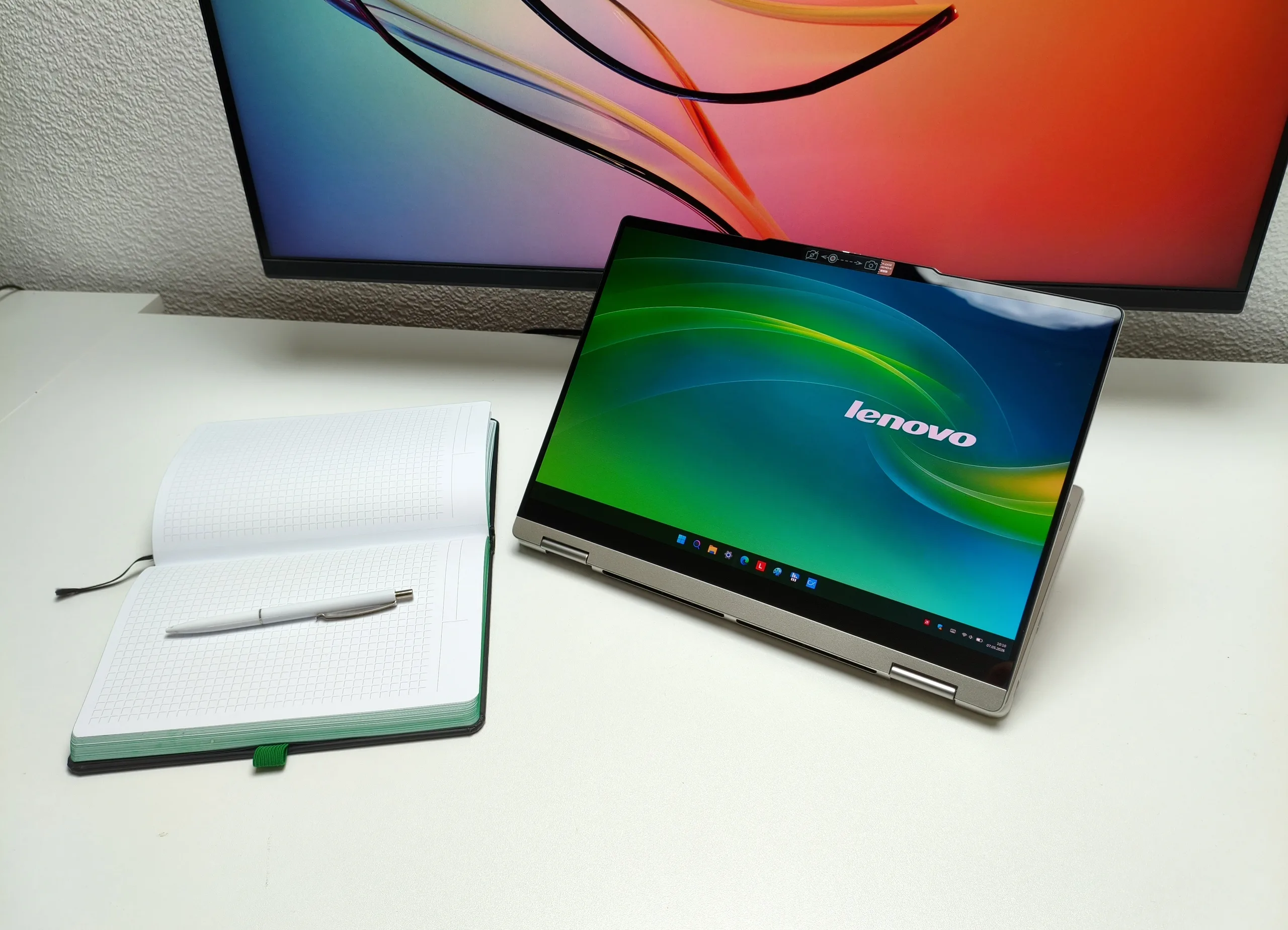
Il Lenovo Yoga 7a 2-in-1 14AGP11 è un notebook convertibile da 14 pollici progettato per essere utilizzato sia come laptop che come tablet. Si basa sul processore Ryzen AI 5 435 di AMD con grafica Radeon 840M integrata, abbinato a 16 GB di memoria LPDDR5X e a un SSD NVMe da 512 GB. Il dispositivo dispone di un touchscreen OLED 1920 x 1200 con supporto nativo della penna, ma il display è lucido e limitato a 60 Hz. La connettività è forte, con USB-C Power Delivery, HDMI, microSD, WiFi 7 e Bluetooth 5.4 inclusi. La batteria da 70 Wh, la fotocamera da 5 MP, la tastiera retroilluminata e la configurazione a quattro altoparlanti favoriscono la produttività mobile. Le recensioni lo descrivono generalmente come un tuttofare capace e flessibile, piuttosto che come un leader di categoria.
Specifiche tecniche
Price comparison
Media dei 4 punteggi (dalle 5 recensioni)
recensioni per Lenovo Yoga 7a 2-in-1 14AGP11
Lenovo ha progettato lo Yoga 7a 2-in-1 come un dispositivo mobile per quasi tutti gli scenari possibili. Che si tratti di un tablet o di un notebook classico, il modello da 14 pollici offre molte opzioni di utilizzo. Abbiamo preso un modello con il nuovissimo Ryzen AI 5 435 e abbiamo effettuato diversi confronti.
Sorgente: Pokde
 EN→IT
EN→ITWhile Lenovo’s official website lists the starting price of this Yoga 7a 2-in-1 chassis at RM5,399, we’ve found a matching SKU on Shopee (from Lenovo’s official store) that lists RM4,889 apiece. Considering you get 24GB of RAM from this kind of price, we could forgive some of its shortcomings in terms of performance and features, and considering the memory pricing situation at large, the value is pretty solid here – even if it’s not necessarily going to wow you.
Singola recensione, disponibile online, Medio, Data: 05/25/2026
Valutazione: Punteggio totale: 79% prezzo: 80% prestazioni: 75% mobilità: 75% qualità di lavorazione: 75%
Sorgente: XDA Developers
EN→ITThe question of "should you buy this laptop" is hardly a straightforward yes or no. For me, performance matters. I'm not going to drag-race this mid-range laptop basically ever, and the heaviest workload it's going to see is Photoshop, but on the odd chance I do open up Premiere Pro, choose to compile some code locally, or play the odd game, I don't want to be reminded that I bought a laptop that had a poorly refreshed architecture.
Confronto, disponibile online, Corto, Data: 05/03/2026
Valutazione: Punteggio totale: 70%
Sorgente: Hardware Canucks
Should you pay to upgrade your laptop build or pay for CPU, memory, storage and screen upgrades? In this video we look at some examples (with the Lenovo 7a 2-in-1) of what good and bad upgrades look like and their effect on performance, battery life and your budget.
Singola recensione, disponibile online, Lunghissimo, Data: 04/19/2026
Sorgente: Tom's Guide
EN→ITAs the Asus Zenbook A14 was put on the right track to take on the MacBook Air last year, this year’s A14 and A16 march forward when it comes to performance, but while the A16 shows up strongly with pro level performance in a skinny body, the A14 takes a step back in value for money. For great ultra-portable all-rounders, Apple stays, and if you’re loyal to Microsoft’s OS and want that same experience, the Zenbook A14 is a good (if expensive) alternative. Meanwhile, the A16 sets a new precedent for a thin and light pro machine that bridges the gap between MacBook Air and MacBook Pro, but the stamina suffers because of it. And with adjusted pricing showing the gap widening in bang for buck between Apple and Asus, what was a shoe-in for two of my favorite systems of the year has left me feeling indifferent.
Singola recensione, disponibile online, Corto, Data: 04/15/2026
Valutazione: Punteggio totale: 70%
Sorgente: Matthew Moniz
The 2026 Lenovo Yoga 7a 2-in-1, powered by the AMD Ryzen AI 400 Series processors. It comes with a 2.8K OLED display, 100% DCI-P3 color accuracy, and a Wacom pen Yoga Pen Gen 2.
Singola recensione, disponibile online, Lungo, Data: 03/12/2026
Commenti
AMD Radeon 840M: Una iGPU con architettura RDNA 3.5 piuttosto potente che ha debuttato all'inizio del 2025 e che è il diretto successore della Radeon 760M. Le sue 8 CU/WGP (512 shader unificati) funzionano fino a 3 GHz. DX12 Ultimate, ray tracing, generazione di immagini AI e altre funzioni moderne sono tutte supportate, così come molti codec video popolari, tra cui in primo luogo AVC, HEVC, VP9 e AV1. Le sue prestazioni di gioco sono abbastanza buone per giocare a 2024 giochi con impostazioni grafiche basse.
Ridurre la distanza delle Schede Grafiche per gli utenti che vogliono utilizzare il videogiochi. I nuovi giochi dovrebbero funzionare su queste schede, ma con riduzione dei dettagli e risoluzione mediocre.
>> Ulteriori informazioni le potete trovare nel nostroConfronto delle schede grafiche e nella nostra Lista dei Benchmark.
Ryzen AI 5 435: Un processore relativamente potente della famiglia Gorgon Point, introdotto all'inizio del 2026. L'APU integra 6 core di CPU (2x core Zen 5 con un massimo di 4,5 GHz e 4x core Zen 5c con un massimo di 3,4 GHz). Tecnicamente molto simile al vecchio ma con clock più elevato AMD Ryzen AI 5 340.
>>Ulteriori informazioni le potete trovare nel nostroConfronto dei processori per portatili.
Notebooks di altri Produttori e/o con differente CPU
Portatili con medesima GPU
Portatili con uguale dimensione dello Schermo e/o peso
Portatili dello stesso Produttore
 Add as a preferred source on Google


